What Research Says About Subitizing & Math Success
The research linking early subitizing skills to future math achievement is substantial and compelling.
- A Predictor of Future Achievement: Studies have consistently found that a child’s ability to subitize in kindergarten is a strong predictor of their math success in first and second grade. Children who can subitize well tend to grasp new math concepts faster.
- It Frees Up Working Memory: Counting takes mental effort (working memory). If a child has to count every time they see four items, their brain is busy with the counting process instead of focusing on the actual math task at hand (like solving a word problem or adding numbers). Subitizing automates this step, freeing up working memory for higher-level thinking.
- Better Understanding of Place Value: Strong number sense developed through subitizing eventually translates into a better understanding of how our base-ten number system works and the importance of place value.
📌THIS IMAGE FOR LATER
Simple Ways to Practice in the Classroom
Incorporating subitizing into the kindergarten day is easy and fun. Check out why you should teach subitizing especially in kindergarten here.
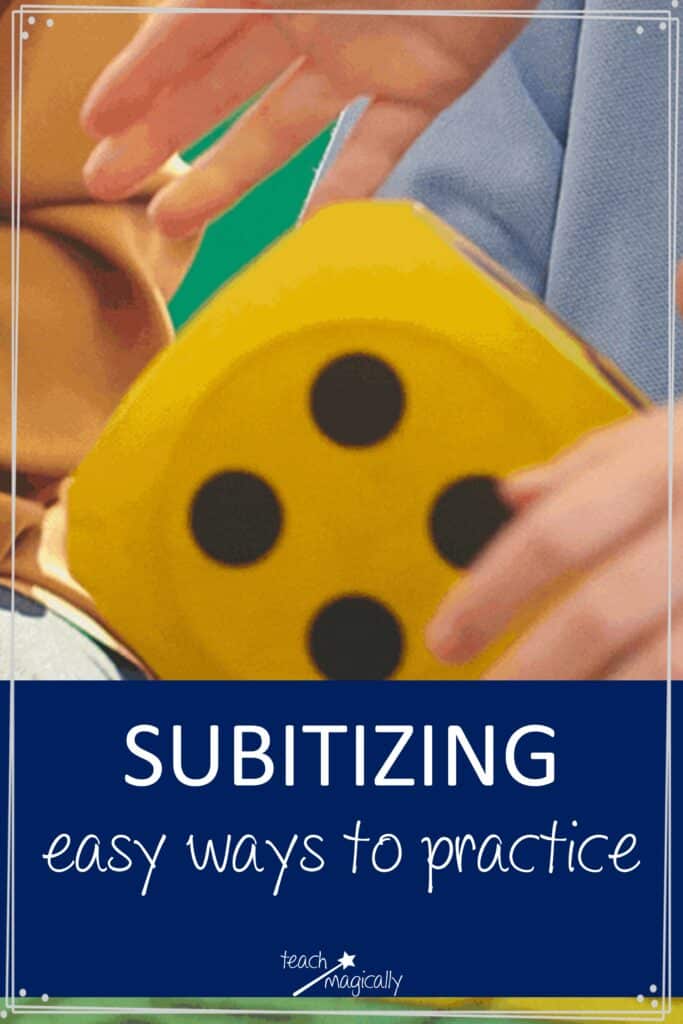
- Flash Cards: Quickly flash dot cards and have students talk about what they see. On the other hand, they could color to match.
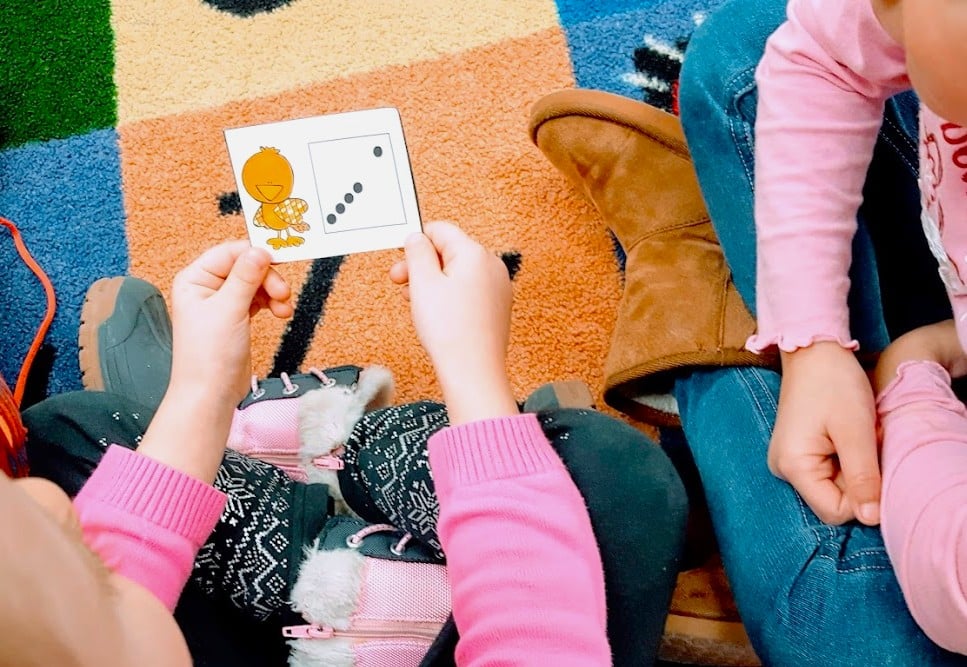
- Use Everyday Objects: Ask students how many crayons you are holding, how many students are sitting at a table, or how many pieces of fruit are in a basket.
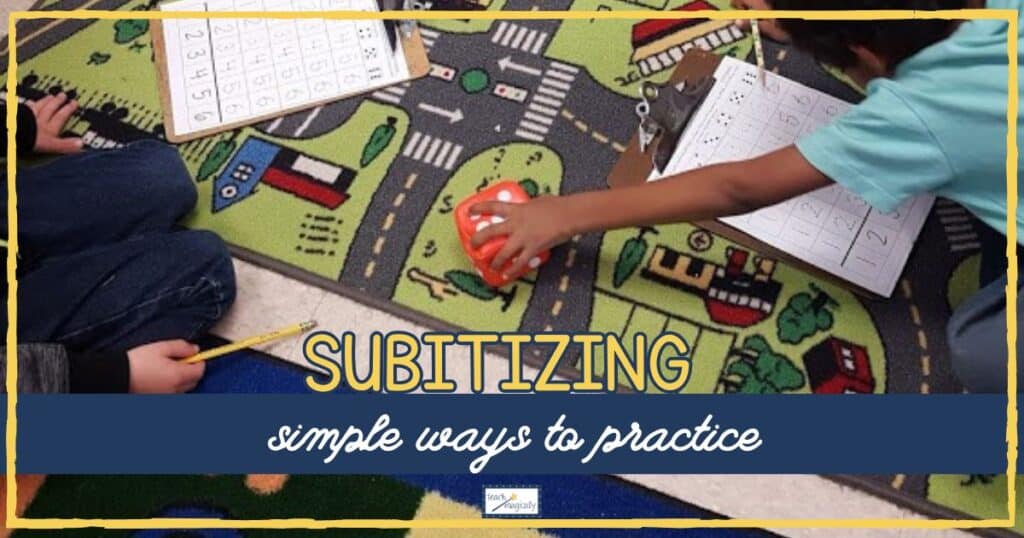
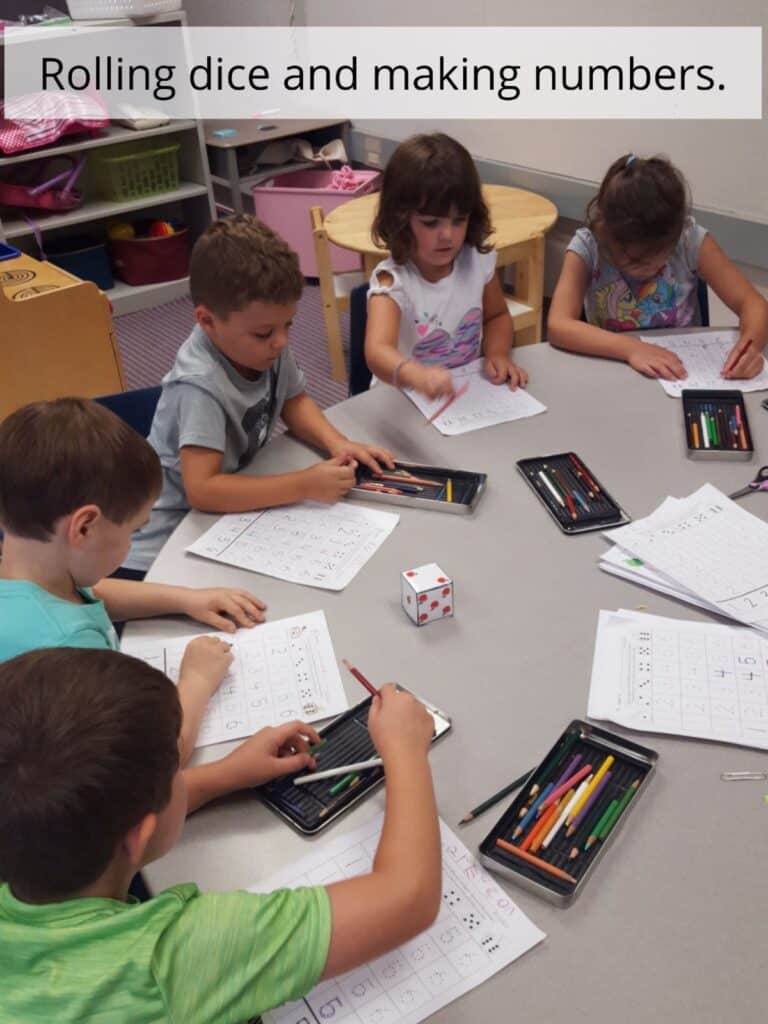
- Dice Games: By all means, provide simple board games where rolling a die requires instant recognition of the quantity to move their piece for indoor recess or early finishers.
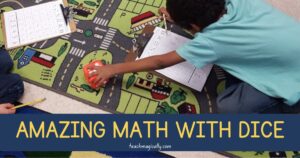
Here is a fun dice game to play with kiddos.
Using Manipulatives and Everyday Objects to Practice
- Quick Collections (Grab Bag): Put a variety of small objects (for example: mini erasers, buttons, small toys, counters) into a bag.
- Have a student grab a handful and drop them on a table.
- Briefly cover the items (after 2-3 seconds) and ask the student how many they saw without counting.
- Uncover the items and count them to verify the “snapshot.”
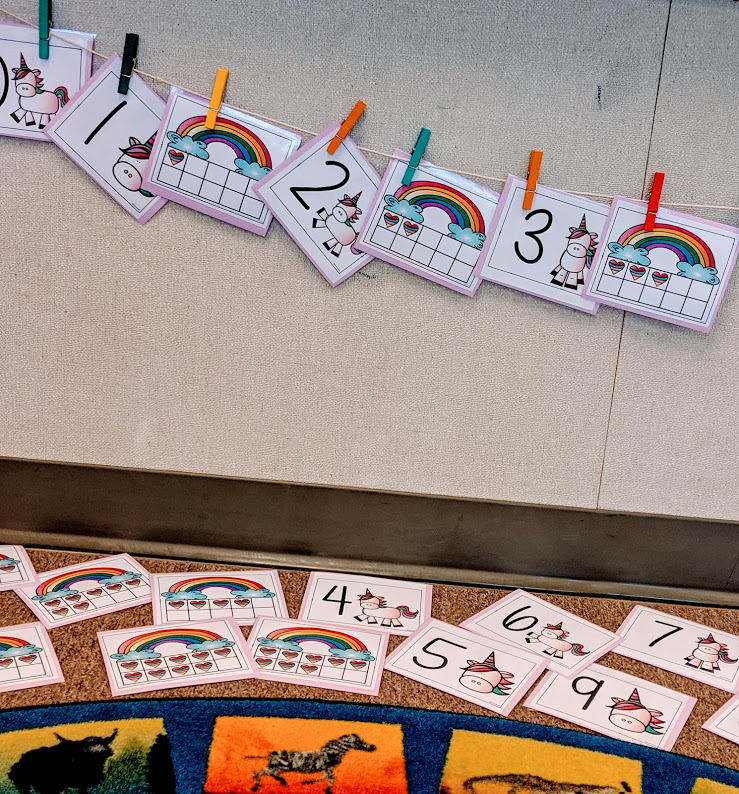
- Ten Frames: Ten frames (a grid of two rows of five squares) are excellent for building number sense and conceptual subitizing.
- Quickly display a number of counters in a ten frame and ask students to say the number. After all, the visual of 5 and 10 help with the number system.
- Students can also use their own blank ten frames and counters to replicate the quantity you flashed.
- Add a math center where kiddos match 10 frames with the number. By all means, provide clothes pins and a string to develop fine motor skills with ordering of the numbers.
- Dominoes: Generally, beyond traditional play, dominoes can be used in various ways.
- Sort dominoes by the total number of dots by adding each half.
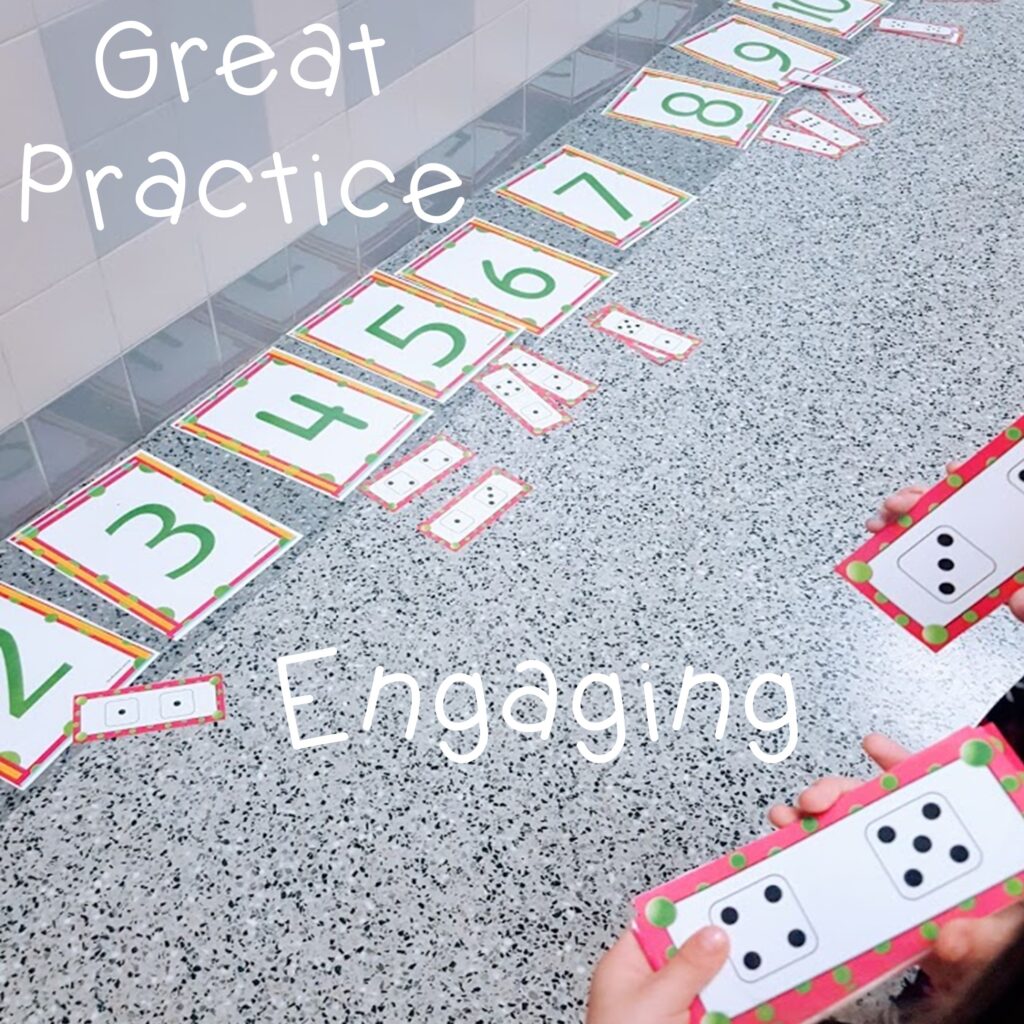
- Dice Games: Obviously, just roll dice and tell the total seen. Of course, if you record the number on a graph, you are helping with handwriting and graphing.
- LEGO Bricks: The structured pattern of studs on LEGO bricks makes them a natural tool for subitizing practice.
- Flash different size bricks and ask students to quickly name the number of studs.
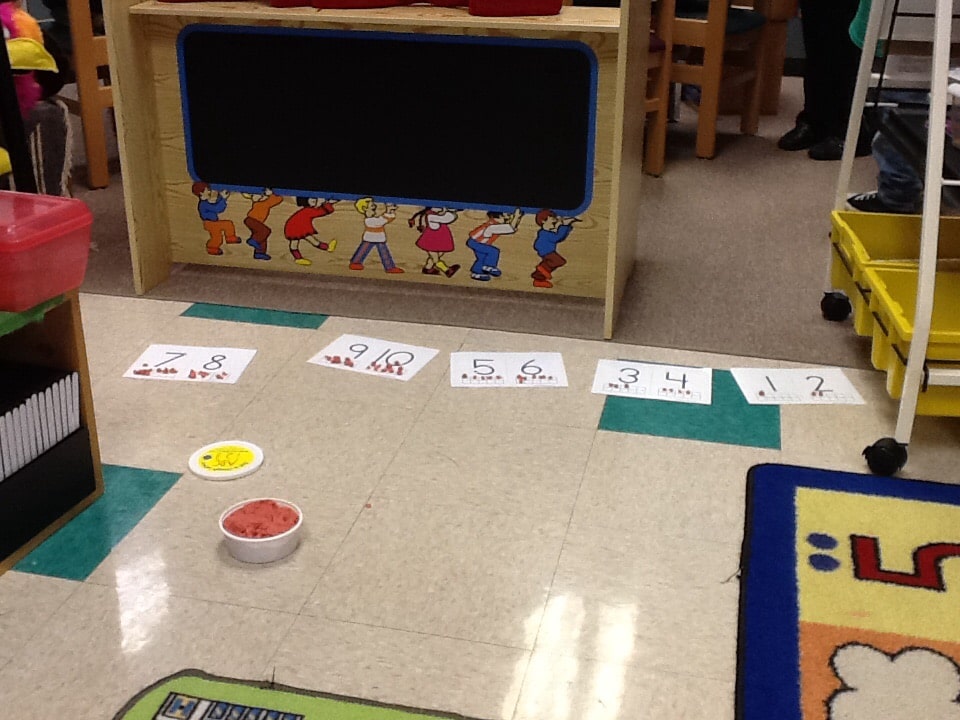
- Play-Doh Mats: Have children make Play-Doh balls on number ten frame cards. Encourage students to arrange the balls in different configurations to practice seeing the same quantity in various patterns.
Subitizing Kinesthetic and Auditory Activities
- Finger Flashes: This is a zero-prep activity that can be done anywhere.
- Hold up a small number of fingers (1-5) for just a second or two, then put your hand down.
- Ask students to say the number they saw or hold up the matching number of fingers.
- Auditory Subitizing (Claps/Snaps): Have students practice subitizing sounds instead of visuals.
- Clap a small number of times (e.g., three claps) and ask students to tell you how many claps they heard.
- Drop a certain number of metal nuts into an aluminum can and students tell how many sounds they heard.
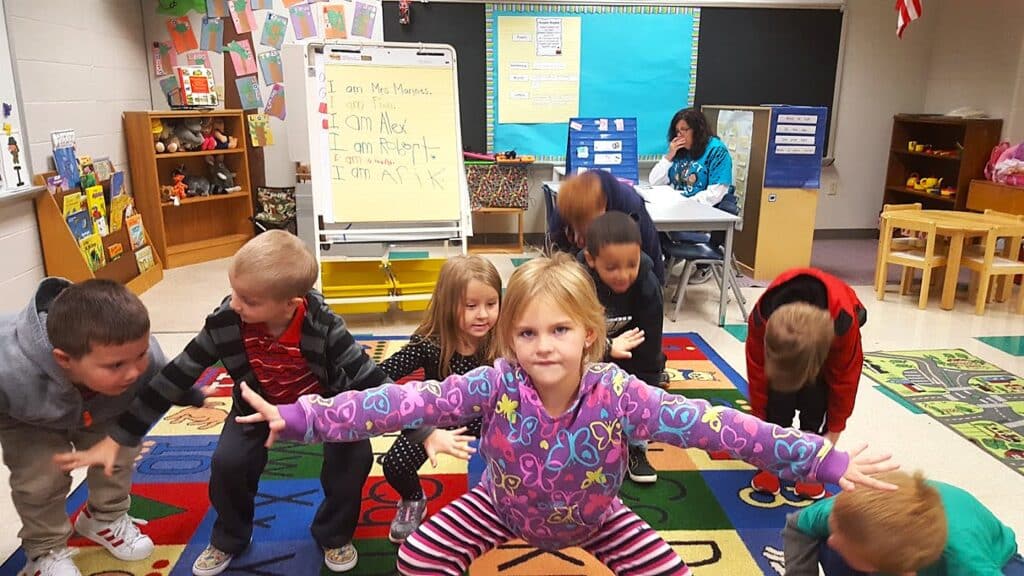
- Movement Games: Integrate movement to practice the skill.
- Roll a die or show a ten frame and have students perform that number of actions, such as squats, jumping, stomping, or clapping their hands.
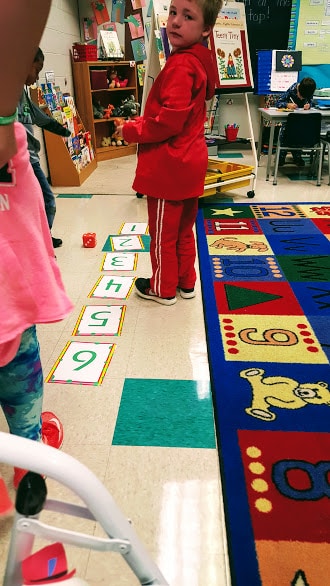
- Place numbers out in a line. Have students roll a die and hop to the number rolled. Then count bag and hop back to 0.
- “How Many?” in the Classroom: Use natural opportunities throughout the day.
- Quickly lift a handful of crayons, pencils, or erasers and ask, “How many?”
- Ask students to identify how many children are in the library corner or at a table.
These activities keep practice fun and varied, helping children build a deep, intuitive sense of number that doesn’t rely on rote counting. You can always check out all my SUBITIZING GAMES.
Teach Magically,
💖Debora